Augmented Reality (AR) Game Development: Future of Gaming
AR game development represents one of the fastest-growing segments in the mobile gaming industry, with staggering market figures to prove it. In 2021, mobile games generated a massive $116 billion in total spending, with at least 174 games each bringing in over $100 million that year.
In fact, the augmented reality game development market specifically is projected to reach $33.5 billion by 2027, showing the tremendous potential in this space. User penetration is expected to climb to 29.2% by 2027, while the average revenue per user is estimated to hit $164 by 2023. These figures clearly indicate why developers and businesses are rushing to capitalize on this technology.
With this in mind, we've created this comprehensive guide to help you understand everything about AR game development. From exploring different types of AR games you can build to explaining the step-by-step development process, we'll cover all the essentials you need to know to enter this exciting market.
The Rise of AR in Mobile Gaming
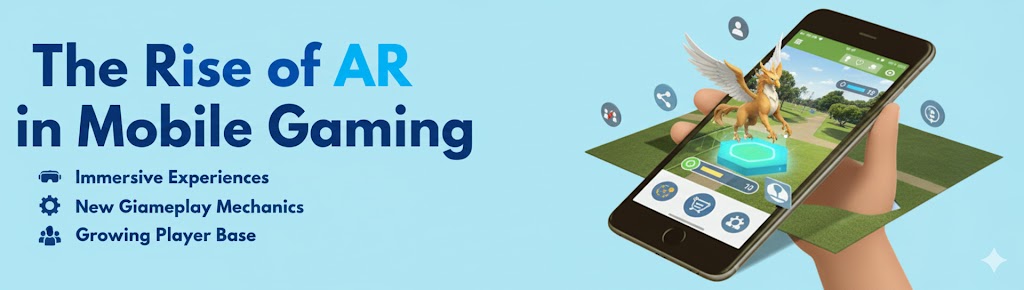
Augmented reality has burst onto the mobile gaming scene, forever changing how players interact with games. Unlike traditional gaming experiences, AR technology overlays virtual elements onto our physical surroundings, creating immersive experiences that blend digital and real worlds.
Global gaming market trends
The numbers behind AR gaming's rise are nothing short of remarkable. The global AR gaming market was valued at USD 28.30 Billion in 2024 and is projected to reach an astounding USD 142.40 Billion by 2030, growing at a CAGR of 30.9%. However, other reliable sources estimate the market will hit USD 141.7 Billion by 2033, exhibiting a slightly lower but still impressive CAGR of 25.9%.
Mobile gaming continues to drive this expansion, now comprising 26% of all media consumption hours. The popularity of smartphones has fundamentally changed how games are accessed and played. Furthermore, the introduction of development tools like Apple's ARKit and Google's ARCore has significantly simplified the creation process for developers.
The shift toward wireless, sensory-based devices has also contributed to market growth. Additionally, improvements in AR technology—including more sophisticated tracking, better graphics, and immersive sound—have enhanced the overall gaming experience.
Why AR is gaining popularity
Several factors explain why AR gaming has captured widespread interest. Perhaps most importantly, AR transforms ordinary surroundings into extraordinary adventures. When Pokémon GO launched in 2016, it demonstrated how everyday environments could evolve into engaging virtual playgrounds.
AR games also offer unprecedented immersion. Unlike traditional games where players control virtual characters, AR makes the players themselves central to the experience. This creates a stronger connection between players and game content through:
- Real-world interaction - Players physically move around and engage with their environment
- Enhanced social experiences - Many AR games encourage gathering in public spaces and team play
- Physical activity - Location-based mechanics promote exploration and movement
- Accessibility - Most modern smartphones can run AR games without specialized hardware
What's particularly interesting is AR's appeal beyond traditional gamers. Approximately 35% of non-gamers express interest in AR gaming—significant considering non-gamers represent 23% of consumers. Consequently, the technology opens doors to previously untapped markets.
Key statistics on AR game growth
North America currently dominates the AR gaming landscape, holding over 35% of market share in 2024. Nevertheless, the Asia-Pacific region is emerging as the fastest-growing market, fueled by mobile gaming adoption and technological innovation.
Looking at device preferences, mobile devices lead the market. However, a paradox exists—two out of three respondents are interested in AR gaming, but one in three AR gamers say holding a mobile device isn't good enough for AR gaming. This suggests significant potential for AR headsets and glasses as the technology matures.
From a growth perspective, mobile AR software is estimated to generate more revenue than VR by 2021. Moreover, AR games have demonstrated impressive user retention rates, with some titles reporting over 50% of players returning after their initial experience.
As we look forward, 67% of gamers say they'll increase their AR usage in the next 5 years, pointing toward continued expansion. The future of AR gaming appears increasingly bright as advances in AR hardware and widespread 5G networks promise even more immersive and responsive gameplay experiences.
Types of AR Games You Can Build

The diversity of AR games you can develop today spans far beyond catching virtual creatures. From turning neighborhood streets into zombie-infested landscapes to transforming living rooms into interactive educational spaces, the creative possibilities are virtually endless. Let's explore the most promising AR game genres you can build for today's market.
Adventure and exploration games
Adventure-based AR games blend virtual elements with real-world exploration, encouraging players to venture outdoors and discover hidden digital treasures in their surroundings. Location-based mechanics are the foundation of these experiences, overlaying digital content onto physical landmarks, parks, and city streets.
Pokémon GO remains the flagship example, motivating players to walk around real streets, parks, and landmarks to catch Pokémon, spin PokéStops, and battle in gyms. Newer titles like Monster Hunter Now bring giant monsters into local parks where players can engage in short, real-time hunts.
These games often feature:
- Real-world exploration mechanics that encourage physical movement
- Virtual collectibles tied to geographic locations
- Progression systems that reward outdoor activity
- Narrative elements that unfold as players explore new areas
Indeed, games like Ingress turn cities into giant capture-the-flag boards where players visit real-world landmarks to hack portals and create control fields.
Sports and fitness-based AR games
Fitness AR games have transformed exercise into entertaining adventures. These applications use motion detection and GPS tracking to gamify physical activities, making workouts more engaging and sustainable.
Zombies, Run! exemplifies this approach—turning ordinary runs into thrilling radio dramas where players collect supplies while escaping virtual zombie hordes. The gamification of AR motivates people to increase their exercise frequency due to the stimulating experience.
Notably, AR fitness games are highly addictive because they enable multiplayer competition with friends and implement scoring systems that encourage players to improve their progress. Furthermore, the advanced AR motion detection systems in these games track movements in real-time, delivering immersive interactive workouts.
First, these games provide full-body workouts that improve hand-eye coordination, reaction time, and physical endurance. Second, they turn everyday spaces into fitness arenas without requiring expensive equipment.
Educational and learning-focused games
Educational AR games transform abstract concepts into interactive 3D experiences, making learning more engaging and memorable. Applications like Quiver use coloring pages as triggers that make cells pop off the page or let children spin a globe in midair.
Apps such as Plantale offer detailed AR representations of plant life cycles, whereas Arloon Plants lets students explore interactive plant structures and even watch plants grow through AR. Elements 4D enables students to combine different chemical elements virtually to see reactions in action.
Throughout these experiences, students can closely examine subjects from various angles, enhancing spatial understanding and retention. Rather than passively consuming information, learners actively engage with educational content.
Social and multiplayer AR experiences
Social AR gaming redefines interactive play by encouraging real-world interactions and collaborative exploration. These games foster social connections as players venture into their surroundings, uncovering hidden treasures and solving puzzles together.
The introduction of network multiplayer functionality in AR gaming represents a significant turning point with notable societal impact. This advancement unlocks creative possibilities, enabling users to engage in real-time battles or races with friends, either at home or in public spaces.
For instance, multiplayer AR projects like Summit Scramble—the first cross-platform, real-time multiplayer WebXR game—allows players to test their climbing skills against friends while tracking rankings on a global scoreboard. Similarly, the NICEverse platform lets employees compete in various Mixed Reality games, from timed puzzles to scavenger hunts.
Ultimately, the future of AR game development lies in creating shared experiences. As we move forward, expect to see increasingly sophisticated multiplayer mechanics that bring people together through innovative AR interactions.
Why Choose Augmented Reality Game Development
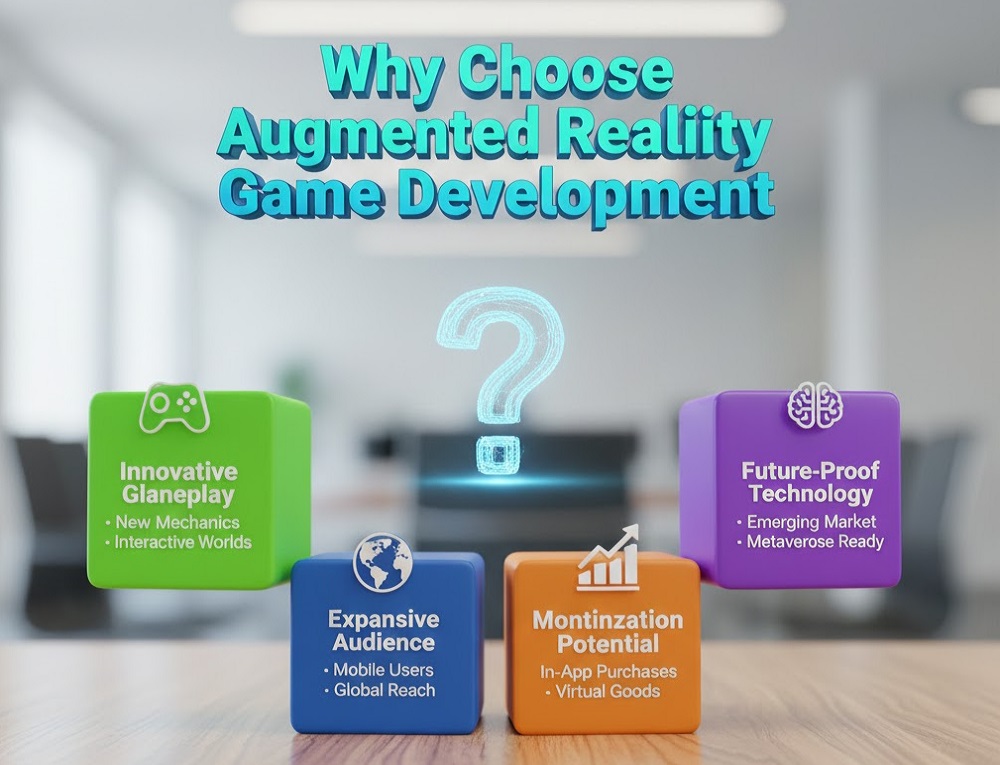
Developing games with augmented reality offers compelling advantages that traditional game development simply cannot match. The transformative power of AR creates experiences that captivate users in ways previously impossible, offering developers unprecedented opportunities to innovate and engage.
Enhanced user engagement
AR gaming dramatically increases user engagement compared to conventional approaches. Interactive AR experiences boost engagement by an impressive 100% to 150% compared to standard methods. This heightened engagement occurs because:
- Users spend more time with AR gamified content as experiences feel novel and rewarding
- Brands implementing AR tools often see a 20% increase in user retention rates
- AR gamification strategies can boost engagement metrics by up to 42% over non-gamified experiences
The human brain responds powerfully to gamified AR experiences. When players achieve goals or receive rewards, their brains release dopamine, serotonin, and endorphins—effects that AR amplifies by making achievements feel more tangible and immediate.
Real-world interaction and immersion
Unlike traditional video games that confine players to screens, AR-powered gaming encourages interaction with digital content overlaid on physical environments. This approach makes gameplay seem more authentic, essentially transforming players into characters within their own stories.
Consider an AR game where you defend your home against virtual aliens—the game overlays creatures onto your environment, making it appear as though your actual home is under attack. This level of immersion creates deeper emotional connections with the gaming experience.
Opportunities for niche targeting
AR game development opens doors to specialized markets that traditional games might not reach. Approximately 35% of non-gamers express interest in AR gaming—significant considering non-gamers represent 23% of consumers.
Educational AR games represent a particularly promising niche. These applications transform abstract concepts into interactive 3D experiences, making learning more engaging and memorable. Throughout these experiences, students can examine subjects from various angles, enhancing spatial understanding and retention.
Cross-platform social connectivity
AR gaming excels at creating shared experiences that build communities around brands or causes. Players collaborate on challenges, compete in leaderboards, and share achievements with friends—social elements that increase user retention and word-of-mouth marketing.
By enabling multiplayer experiences where players collaborate or compete in shared virtual spaces, AR technology facilitates deeper social connections. Imagine friends battling dragons in a digitally-altered cityscape or solving mysteries in an AR-enhanced museum. This communal aspect significantly enhances user engagement and retention.
According to research, 61% of consumers prefer products that use immersive experiences over traditional methods. Ultimately, choosing AR game development positions creators at the cutting edge of gaming innovation while offering unparalleled potential for user connection and engagement.
Top Tools for AR Game Development
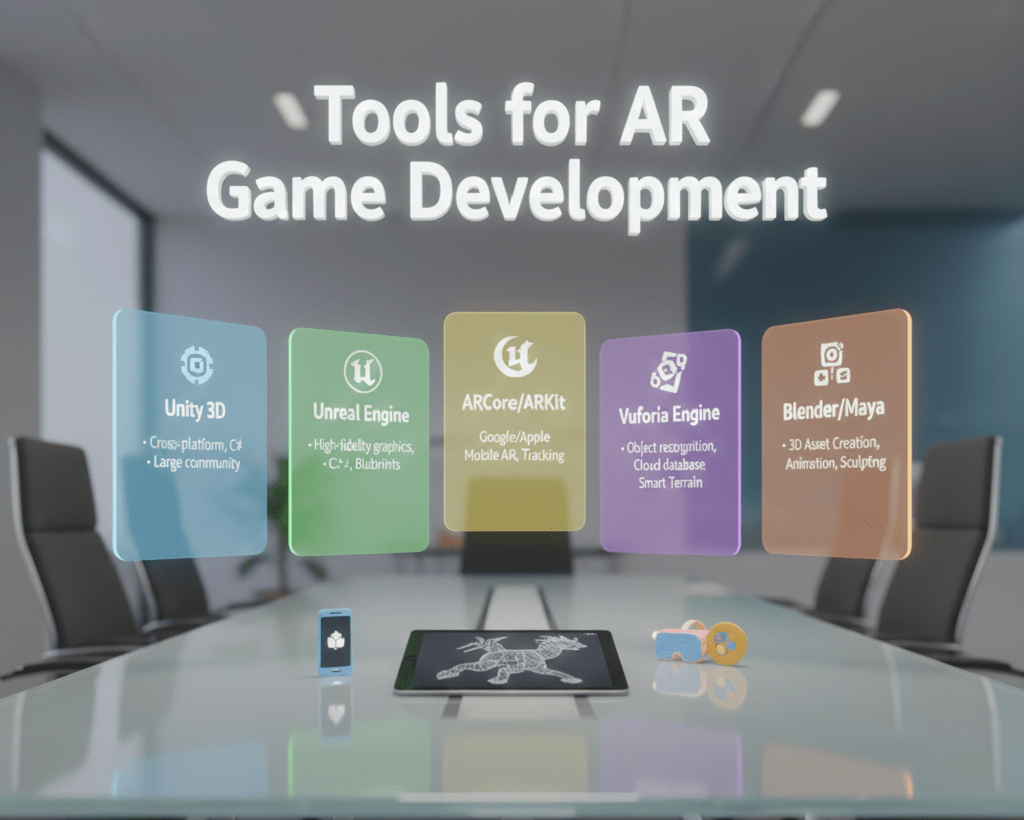
Choosing the right development tools can make or break your AR game project. Several powerful frameworks exist, each offering unique capabilities for creating immersive augmented reality experiences.
AR Foundation
AR Foundation stands as Unity's cross-platform framework enabling developers to build AR experiences for both Android and iOS using a single codebase. This versatile tool requires Unity 2019.4.3f1 or later with appropriate build support, allowing game creators to deploy across multiple mobile devices without rewriting code. AR Foundation presents an interface for Unity developers while implementing platform-specific features through plugins like ARCore XR Plugin for Android and ARKit XR Plugin for iOS.
The framework supports essential AR features including session management, device tracking, plane detection, image tracking, and raycasting. Nevertheless, since AR Foundation relies on platform implementations, certain features may not be available on all devices—something worth considering during your planning phase.
Unity MARS
Unity's Mixed and Augmented Reality Studio (MARS) extends core functionality specifically for AR content creation. This specialized extension allows developers to address real-world objects and events directly as GameObjects. What sets MARS apart is its powerful Simulation mode, which lets you test AR content in different real-world mockups with remarkably tight iteration times.
MARS responds to real-world environments by default, making it ideal for developing contextually aware AR games. Notably, the extension includes specialized UI and controls designed specifically for dynamic content creation.
Unity as a Library
For advanced scenarios, Unity as a Library enables integration of Unity-powered features within native platform applications. This approach allows embedding 3D or 2D real-time rendering experiences like AR into existing apps while maintaining native platform functionality.
Currently supporting Android, iOS, Windows and Universal Windows Platform, this tool exposes methods to manage loading, activating, and unloading within the native application. This approach proves particularly valuable when adding AR mini-games or interactive 3D models to established applications.
XR Interaction Toolkit
The XR Interaction Toolkit provides a component-based system for creating interactive AR experiences without coding everything from scratch. Its core components—Interactors, Interactables, and Interaction Managers—form the foundation for user interactions.
Additionally, the toolkit includes AR-specific features like gesture systems that convert screen touches into meaningful AR interactions. This allows players to place, select, translate, rotate, and scale virtual objects naturally within your game world.
Step-by-Step AR Game Development Process
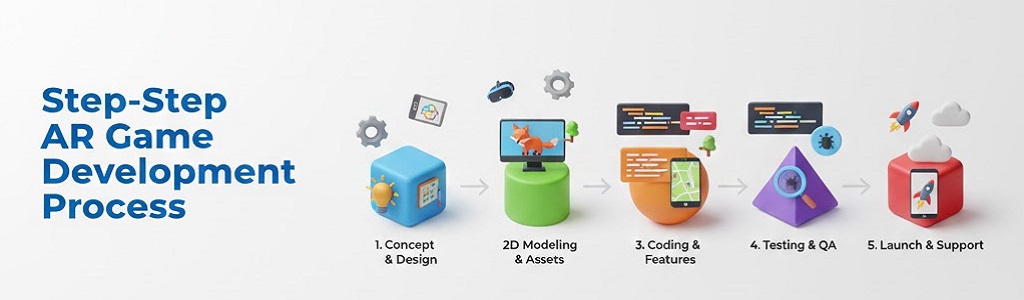
Creating a successful AR game requires a methodical development process that balances technical implementation with creative vision. Let's walk through the essential steps from concept to launch.
Define your game concept and genre
The journey begins with planning your game concept. First, determine your genre—will you create an action game, puzzle, or educational experience? Next, outline how players will interact with the game world and AR elements. Consider what specific AR experiences you want to create, whether it's object interaction or location-based challenges. Finally, identify your target audience, as this influences both design choices and marketing strategies.
Plan core features and interactions
After establishing your concept, focus on technical planning. For location-based AR games, prepare for GPS integration. If building image recognition games, map out detection algorithms and libraries needed. Most importantly, plan how virtual elements will interact with real-world surroundings to ensure player safety and immersion. Consider environmental factors like lighting and spatial awareness that affect gameplay.
Choose the right tech stack
Selecting appropriate development tools is crucial for smooth development. Unity remains a versatile choice that supports AR development across platforms. Alternatively, Unreal Engine offers stunning graphics capabilities. Based on your target platforms (iOS, Android), select appropriate AR development kits—ARKit for iOS or ARCore for Android. Other specialized tools like Vuforia, Wikitude, or Maxst 3D offer unique features worth exploring depending on your game's requirements.
Design game levels and UI
Level design for AR differs fundamentally from traditional games. Incorporate real-world surfaces and objects into gameplay for heightened immersion. Design AR scenes with spatial understanding in mind, carefully planning object placement and AR triggers. Furthermore, create an intuitive, uncluttered UI that players can easily navigate while moving in physical space. Remember that AR interfaces must overlay information without obscuring real-world elements.
Develop, test, and optimize
Development begins by creating a technical roadmap with clear milestones. Implement AR-specific scripting to access device sensors, handle object recognition, and manage real-time interactions. As AR can be resource-intensive, rigorously test performance across various devices. Optimize 3D models, textures, and shaders for smooth performance. Given AR's unique challenges, conduct testing in diverse real-world environments with different lighting conditions.
Launch and maintain your game
Prior to launch, devise marketing strategies leveraging social media, influencers, and other channels to reach your audience. Upon release, establish systems to track AR-specific technical issues and bugs. Subsequently, plan for ongoing feature development based on player feedback. Provide regular updates to keep the experience fresh and engaging, addressing any performance issues that emerge across different devices or environments.

Conclusion
Augmented reality game development stands at the frontier of gaming innovation, offering unprecedented opportunities for developers and businesses alike. Throughout this guide, we've explored how AR transforms ordinary surroundings into extraordinary adventures while creating deeper emotional connections with players. The impressive market projections—reaching $142.40 billion by 2030—certainly demonstrate the tremendous growth potential in this space.
Game developers now have diverse genres to explore, from location-based adventure games that encourage physical exploration to fitness applications that gamify exercise. Educational AR games transform abstract concepts into interactive experiences, while social AR experiences foster real-world connections between players.
The benefits of AR development extend beyond novelty. Users engage 100-150% more with AR content compared to traditional approaches. Additionally, AR opens doors to specialized markets, including the substantial portion of non-gamers expressing interest in augmented experiences.
Powerful development tools like AR Foundation, Unity MARS, and XR Interaction Toolkit make creating immersive AR games more accessible than ever before. Still, successful development requires a methodical approach—starting with a strong concept, careful planning, appropriate tech selection, thoughtful design, thorough testing, and strategic launch.
As AR technology continues to evolve with improved tracking, better graphics, and immersive sound, we'll undoubtedly see increasingly sophisticated experiences emerge. The convergence of AR with 5G networks promises even more responsive gameplay, while advances in AR headsets and glasses may eventually replace the current smartphone-dominated landscape.
Whether you're an established studio or an independent developer, AR game development offers a chance to create truly innovative experiences that blur the line between digital and physical worlds. The time to explore this exciting frontier is now—your next game might just redefine how millions experience reality itself.
Key Takeaways
The AR gaming market is experiencing explosive growth, projected to reach $142.40 billion by 2030, making it one of the most lucrative opportunities in mobile gaming today.
AR games boost user engagement by 100-150% compared to traditional games through real-world interaction and immersive experiences • Four main AR game types offer diverse opportunities: adventure/exploration, sports/fitness, educational, and social multiplayer experiences • Unity's AR Foundation and MARS provide cross-platform development tools that simplify creating AR games for both iOS and Android • Success requires methodical planning: define concept, plan interactions, choose tech stack, design levels, develop/test, then launch strategically • AR appeals to 35% of non-gamers, opening untapped markets beyond traditional gaming audiences
AR game development represents the future of interactive entertainment, transforming ordinary environments into extraordinary digital playgrounds while creating deeper emotional connections between players and content.
FAQs
What software and hardware do you use for AR game development?
We usually use a mix of hardware and software tools to develop AR games. Software-wise, AR development platforms like ARKit (iOS) and ARCore (Android) are frequently utilized, as are well-known game engines like Unity or Unreal Engine. Tools like Blender or Maya are used for 3D modeling. Devices like smartphones and AR glasses (like Microsoft HoloLens and Magic Leap) are examples of hardware. To create immersive experiences, we also frequently use specialized cameras, motion capture devices, and depth sensors. These resources aid in creating realistic and interactive augmented reality games.
How much time does it take to make an augmented reality game?
Depending on its complexity, developing an augmented reality (AR) game can take several months to more than a year. A basic augmented reality game could take 3 to 6 months, but more complex ones with sophisticated features, intricate graphics, and multiplayer components might take up to a year. Development time is also impacted by elements such as team size, resources, and technology (like ARKit or ARCore). Important phases that can further affect the timeline include prototyping, testing, and improving user experiences.
What is the future of augmented reality?
Augmented reality (AR) has a promising future in a number of sectors, including gaming, education, healthcare, and retail. We can anticipate more seamless and immersive experiences as augmented reality technology advances, fusing the virtual and real worlds in real time. AR will probably be incorporated into commonplace gadgets, such as smartphones and glasses, improving our ability to work, learn, and communicate. AR will make experiences smarter, quicker, and more customized thanks to developments in AI and 5G. Its expansion will change industries by providing new means of interacting with content, working remotely, and resolving practical issues.
How much does it cost to develop an AR game?
The cost of an AR game depends on several factors related to its complexity, platform, design, and features. A simple AR game can cost anywhere from $20,000 to $50,000, but advanced ones with specific features and graphics may be in the range of $80,000 to $500,000 and more. Costs also depend on the location, skills, and hours spent by developers. Additional costs might become necessary for marketing, further development, and server maintenance. Note that your exact needs should be discussed with developers to get a better estimate that suits your project.
Categories
- Sports
- Sports Website
- Fantasy
- Betting
- Software
- Software tools
- Artificial intelligence
- Machine learning
- Programming
- JavaScript
- Digital Marketing
- Marketing analytics
- Mobile marketing
- SEO
- Cryptocurrency
- Decentralized Application (dApp)
- Smart Contract
- Blockchain Security
- Blockchain Software
- Website Development
- Front-end Web
- Back-end Web
- Full-stack Web
- Web Development Software
- Web Services
- Web Development Trends
- eCommerce
- Mobile App Development
- Hybrid App
- Cross-platform App
- Android App
- iOS App
- E-commerce App
- Social Networking App
- Health and Fitness App
- Education App
- Travel and Tourism App
- Food and Drink App
- Entertainment App
- Productivity App
- Utility App
- Fantasy App
- Wearable Device
- PhoneGap
- Dating App
- Real Money App
- Game Development
- Puzzle games
- Board games
- Card games
- Casino games
- AR and VR games
- Multigaming



My Name is DC Kumawat. I am CEO of Orion InfoSolutions, a leading provider of game development solutions to businesses of all sizes. I keep a strong focus on the new technologies that are driving our digital world. As an IT entrepreneur, I believe that it is my mission to break down these difficult market changes into useful insights for my community.